
The Base-Metal-Electrode MLCCs (BME MLCC) market refers to a specialized segment within the electronics industry that involves the production and utilization of multilayer ceramic capacitors (MLCCs) featuring base-metal electrodes. Unlike traditional MLCCs that utilize precious metals like palladium and silver, BME MLCCs employ base metals such as nickel and copper. These capacitors find widespread application in various electronic devices due to their cost-effectiveness, improved availability of raw materials, and comparable electrical performance. The base-metal-electrode technology not only addresses concerns related to the scarcity and price volatility of precious metals but also contributes to the overall sustainability of electronic components. Opportunities within the BME MLCC market are abundant, driven by the ongoing trends in miniaturization, increased functionality, and the growing demand for electronic devices across diverse industries. The compact size and enhanced performance characteristics of BME MLCCs make them well-suited for applications in automotive electronics, telecommunications, consumer electronics, and industrial equipment. As electronic devices continue to evolve, creating a demand for smaller and more efficient components, the BME MLCC market stands poised for significant growth.
The Base-Metal Electrode (BME) C0G MLCC typically use a CaZrO3-based linear dielectric material. Compared to the Class-II dielectrics such as X7R (BX) or X8R materials, the C0G dielectrics have the advantages of high stability of capacitance over temperature and voltage (temperature coefficient of capacitance, TCC ≤ 30ppm for the range -55°C to 125°C), no aging of capacitance, no micro-phonic effects, and low dielectric loss (DF). In addition, with the progress in BME technology, the maximum capacitance offering as well as reliability of BME C0G are greatly improved compared to the traditional precious metal electrode (PME) C0G MLCC [1-2].
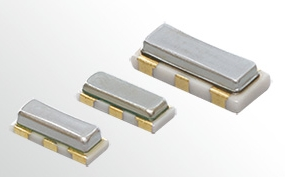
X7R BME MLCCs deliver a 39x increase in capacitance compared to standard 100V, 1812 MIL-PRF-123 and MIL-PRF-55681 MLCCs, reducing circuit board space, weight, and component count while meeting DLA requirements for reliable performance in space applications. The series also features Flexiterm termination technology, which allows for more board flexure than standard terminations, protecting against thermal and mechanical stresses during assembly and throughout component lifetimes.
The robust reliability of BME C0G is attributed to several factors. Ceramic capacitors using BME technology are typically fired under a reducing atmosphere, and then, exposed to a well-controlled re-oxidation process to alleviate any oxygen vacancies that might have formed in the dielectric. The CaZrO3-based formulation is highly reduction resistant. This is evident from extensive studies of transmission electron microscopy (TEM) of the fired dielectric and dielectric/electrode interfaces, as well as from highly accelerated life tests on BME C0G capacitors fired with and without reoxidation treatment. Figure 3(a-b) show typical interfaces of Nickel electrode and BME C0G dielectric which show the clean interfaces without any signs of reduction of the dielectric or any spurious Ni/Ca/Zralloy or mixed oxide formation. Figure 4 (a-b) shows insulation resistance of BME C0G 1206/47nF/50V and 0805/22nF/50V capacitors fired with and without reoxidation treatment and then HALT tested for 92 hours at 175°C and 400V. These IR results indicate that this dielectric has robust reliability when processed with or without reoxidation. In the CaZrO3, the Oxygen ions are tightly bound in the perovskite crystal structure due to the high affinities of Calcium and Zirconium ions for Oxygen. This factor, along with the reduction resistant formulation and the wide band gap nature of Zirconium make this BME C0G highly reduction resistant, and reliable under bias and elevated temperature conditions. The BME C0G capacitors still receive an optimized reoxidation treatment during their manufacturing. The BME C0G capacitors are also proven to be extremely robust under long term humidity testing at 1x and 2x rated voltages as well as under low-voltage humidity testing (1.5-1.7V).

Copyrights 2024©, zapnix. All Rights Reserved.